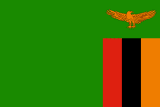
Zambia sits at a crossroads of Bantu migrations, resulting in one of the most linguistically diverse nations in Africa with over 70 languages. Bemba emerged as the dominant tongue of the copper-rich Copperbelt region, where its adoption as a trade and urban language spread it far beyond its original homeland in northeastern Zambia. Nyanja — closely related to Chichewa — became the lingua franca of the capital Lusaka and the Eastern Province, while Tonga holds sway along the Zambezi River valley. British colonial rule (as Northern Rhodesia) from the 1890s established English as the language of government and education; at independence in 1964, Zambia retained English as its official language to bridge its many ethnic groups. In 1991, the government formally recognized seven regional languages — Bemba, Nyanja, Tonga, Lozi, Kaonde, Luvale, and Lamba — as official languages alongside English, a rare acknowledgment of Bantu linguistic plurality in African governance.
