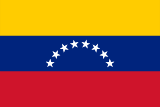
Venezuela

Romance · Indo-European
Venezuela flag
Languages
Native
Spanish
97%
Secondary languages
English
11%
Language Samples
Hola, ¿cómo estás?
Hello, how are you?
Estoy muy bien, gracias.
I am very well, thanks.
Uno, dos, tres, cuatro, cinco, seis, siete, ocho, nueve, diez.
One, two, three, four, five, six, seven, eight, nine, ten.
Linguistic History

Spanish colonization of Venezuela began in the early sixteenth century, with the coast being among the first South American territories encountered by Europeans — Columbus himself reached the Gulf of Paria in 1498 on his third voyage. The colonial period established Spanish over dozens of indigenous languages, including Wayuunaiki, Pemón, and Yanomami, though the latter two remain spoken in the Orinoco basin and southern jungles to this day. Venezuelan Spanish developed within the Caribbean dialectal zone, sharing characteristics with Cuban, Dominican, and coastal Colombian Spanish: rapid speech tempo, debuccalization (aspiration or deletion) of syllable-final /s/, and frequent yeísmo. The Maracucho dialect of the Zulia region around Lake Maracaibo retains archaic features including voseo and a distinctive intonation that sets it apart from the Caracas standard, making it one of the most recognizable regional accents in the continent. Oil wealth in the twentieth century brought waves of immigrant workers — Italians, Portuguese, Spaniards — whose languages left traces in Venezuelan vocabulary and further diversified the urban speech of Caracas.
Similar Languages
Portuguese
89%
Italian
82%
French
75%
Romanian
71%
Media
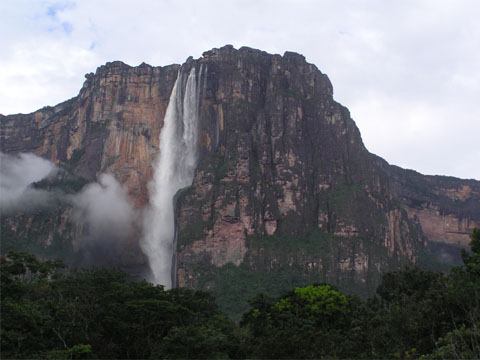
Salto Ángel (Angel Falls), Venezuela — in the Pemón indigenous territory where Pemón and Spanish coexist in the Gran Sabana.
Photo: Yosemite · CC BY-SA 3.0
Did You Know
01
Venezuela's Zulia region around Lake Maracaibo has its own dialect — Maracucho — that uses voseo (the archaic 'vos' pronoun) and a sing-song intonation so distinct that other Venezuelans instantly recognize it.
02
Columbus reached the Venezuelan coast in 1498 on his third voyage, making it one of the first South American territories to encounter Spanish — yet settlement lagged behind richer colonial prizes like Mexico and Peru.
03
Venezuela recognizes 30+ indigenous languages as official within indigenous territories; the Wayuu people of the Guajira Peninsula speak Wayuunaiki, which has more speakers than any other Venezuelan indigenous language with around 300,000 users.
Want to learn this language?
Start learning Spanish today
Learn with Lingua →