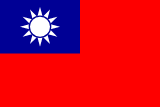
Taiwan

Sino-Tibetan
Taiwan flag
Languages
Native
Mandarin Chinese
83%
Min Nan (Taiwanese Hokkien)
70%
Secondary languages
English
16%
Hakka
13%
Language Samples
你好,你好嗎?
Nǐ hǎo, nǐ hǎo ma?
Hello, how are you?
我很好,謝謝。
Wǒ hěn hǎo, xièxiè.
I am very well, thank you.
一、二、三、四、五、六、七、八、九、十
Yī, èr, sān, sì, wǔ, liù, qī, bā, jiǔ, shí
One, two, three, four, five, six, seven, eight, nine, ten.
Linguistic History

Taiwan's dominant language is Mandarin Chinese (Guoyu, 國語, 'national language'), introduced as the sole official language after the Republic of China government relocated from the mainland in 1949. A crucial distinction sets Taiwanese Mandarin apart from the Mandarin of mainland China: Taiwan has preserved the Traditional Chinese character system (繁體字) used throughout Chinese history, while the People's Republic of China introduced Simplified characters in the 1950s to boost literacy. This means the written heritage of classical Chinese literature, calligraphy, and historical records is more directly accessible in Taiwan than anywhere else. Alongside Mandarin, Taiwanese Hokkien (Min Nan) is spoken natively by the majority of the population as a heritage language, and Hakka is spoken by a significant minority. Indigenous Austronesian languages — some 16 recognised groups — are the oldest languages of the island and are now protected under language revitalisation laws.

Similar Languages
Min Nan / Hokkien
60%
Cantonese
50%
Hakka
40%
Japanese (written loanwords)
30%
Media
The National Palace Museum in Taipei — home to one of the world's greatest collections of Chinese art and manuscripts, all preserved in Traditional Chinese characters.
Photo: Peellden · CC BY 3.0
Did You Know
01
Taiwan uses Traditional Chinese characters (繁體字) rather than the Simplified script of mainland China — a choice that preserves the visual etymology and classical heritage of written Chinese.
02
Bopomofo (注音符號), a phonetic system invented in 1913, is still used in Taiwan to teach pronunciation to children — mainland China switched to the Pinyin romanisation system instead.
03
Min Nan (Taiwanese Hokkien) has no standardised written form used in everyday life, yet millions of Taiwanese switch naturally between it and Mandarin — often mid-sentence — in a phenomenon called code-switching.
Want to learn this language?
Start learning Mandarin Chinese today
Learn with Lingua →