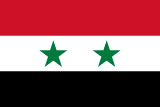
Languages
Native
Arabic (Levantine)
90%
Kurdish
12%
Secondary languages
French
15%
English
20%
Language Samples
مرحبا، كيفك؟
Marhaba, kifak?
Hello, how are you? (Levantine dialect)
منيح، شكراً.
Mnee7, shukran.
Fine, thank you.
واحد، اثنين، تلاتة، أربعة، خمسة، ستة، سبعة، تمانية، تسعة، عشرة.
Wahad, ithnayn, tlata, arba'a, khamsa, sitta, sab'a, tmania, tis'a, 'ashara.
One, two, three, four, five, six, seven, eight, nine, ten.
Linguistic History
Syria lies at the heart of the Fertile Crescent and was once the stronghold of Aramaic — the language of Jesus and the ancient Near East — before Arabic became dominant following the 7th-century Islamic conquests. Syrian Arabic (Shami) belongs to the Levantine branch, closely related to Lebanese and Palestinian Arabic. Damascus, one of the world's oldest continuously inhabited cities, was the capital of the Umayyad Caliphate, the first great Islamic empire, which spread Arabic across a vast territory. French influence during the Mandate period (1920–1946) left a legacy in vocabulary and educated speech.
Similar Languages
Hebrew
58%
Aramaic
35%
Amharic
22%
Maltese
30%
Media

The Umayyad Mosque in Damascus, one of the oldest mosques in the world
Photo: Bertilvidet · CC BY 2.5
Did You Know
01
The city of Ugarit in northwestern Syria produced one of the world's earliest alphabets around 1400 BCE.
02
Neo-Aramaic dialects — direct descendants of the ancient language — are still spoken by some Assyrian and Syriac Christian communities in Syria.
03
The Levantine dialect's word for 'yes' — 'eh' (إه) — differs markedly from the standard Arabic 'na'am', reflecting centuries of local evolution.