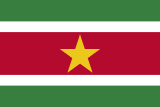
Suriname is the smallest sovereign state in South America and the only one where Dutch is the official language — a legacy of Dutch colonisation beginning in 1667 when the Dutch traded the territory with the English in exchange for what is now New York. The country's extraordinary ethnic diversity stems from the colonial era: enslaved Africans, then indentured labourers from India, Java, China, and the Middle East, arrived in successive waves. This produced one of the most linguistically complex societies on earth. Sranan Tongo, an English-based creole that developed among enslaved Africans, became the true lingua franca across all communities and is more widely spoken day-to-day than Dutch itself. Suriname's interior is home to Maroon communities — descendants of escaped enslaved people — who preserve distinct creole languages like Saramaccan and Ndyuka.
