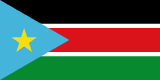
South Sudan is one of the most linguistically diverse nations on Earth, home to more than 60 distinct languages spanning the Nilo-Saharan, Niger-Congo, and Central Sudanic families. Dinka, spoken by the largest single ethnic group, is a Western Nilotic language of the Nilo-Saharan super-family characterized by an exceptionally complex tonal system and long vowel distinctions. Nuer, closely related to Dinka, is spoken along the Nile marshlands and was famously studied by anthropologist E.E. Evans-Pritchard in the 1930s. Arabic — particularly South Sudanese Creole Arabic (Juba Arabic) — developed as a trade and military lingua franca during the Anglo-Egyptian Condominium period (1899–1956) and remains widely spoken in urban centers. English was adopted as the official language at the founding of the Republic of South Sudan in 2011, the world's newest country, born after a 2011 independence referendum following decades of civil war with Sudan. The country's extreme linguistic diversity — with no single language spoken by more than 15% of the population — makes English and Juba Arabic essential bridges across communities.
