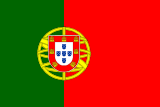
Portugal

Romance · Indo-European
Portugal flag
Languages
Native
Portuguese
99%
Secondary languages
English
27%
French
15%
Spanish
11%
Language Samples
Olá, como está?
Hello, how are you?
Estou muito bem, obrigado.
I am very well, thanks.
Um, dois, três, quatro, cinco, seis, sete, oito, nove, dez.
One, two, three, four, five, six, seven, eight, nine, ten.
Linguistic History

Portuguese descended from the Vulgar Latin spoken in the Roman province of Gallaecia, in what is now northwestern Portugal and Galicia (Spain). During the Middle Ages, Galician-Portuguese was a prestigious literary language used for lyric poetry across the Iberian Peninsula. After Portugal gained independence in the 12th century, the southern dialect diverged into modern Portuguese, while Galician continued as a separate but closely related language in northwestern Spain. The Age of Discovery in the 15th and 16th centuries spread Portuguese to Brazil, Africa, and Asia, establishing it as a global language. Today Portuguese is the sixth most spoken native language in the world, with Brazil alone accounting for more than 200 million speakers.

Similar Languages
Spanish
89%
Italian
80%
French
75%
Romanian
72%
Media
The Jerónimos Monastery in Lisbon, a UNESCO World Heritage Site celebrating Portugal's Age of Discovery.
Photo: Heartshade · CC BY 4.0
Did You Know
01
Portuguese has two very distinct standard varieties — European and Brazilian — that differ notably in pronunciation, vocabulary, and even some grammatical structures.
02
The word 'saudade', a deep emotional longing for something absent or lost, is considered untranslatable and a defining concept of Portuguese culture and music (fado).
03
Portuguese is the official language of nine countries across four continents, making it one of the most geographically widespread languages in the world.
Want to learn this language?
Start learning Portuguese today
Learn with Lingua →