Philippines

Austronesian
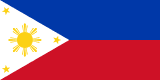
Philippines flag
Languages
Native
Filipino (Tagalog)
45%
English
55%
Secondary languages
Cebuano
24%
Ilocano
11%
Language Samples
Kumusta ka?
How are you?
Mabuti naman, salamat.
I am fine, thank you.
Isa, dalawa, tatlo, apat, lima, anim, pito, walo, siyam, sampu.
One, two, three, four, five, six, seven, eight, nine, ten.
Linguistic History

The Philippines has two official languages: Filipino — based on Tagalog — and English. Filipino is the national lingua franca, while English is co-official and widely used in government, education, and business. The country is home to over 180 living languages, all belonging to the Austronesian family. Tagalog, native to the Luzon region, was elevated to the basis of the national language after independence in 1946. Spanish colonial rule (1565–1898) left a lasting imprint on Filipino vocabulary; English dominance followed under American administration (1898–1946), creating today's bilingual educated population. Approximately 55% of Filipinos are proficient in English, making the Philippines one of the largest English-speaking populations in the world. Cebuano, spoken in the Visayas and Mindanao, is the second most widely spoken native language.

Similar Languages
Cebuano
55%
Malay
30%
Indonesian
28%
Media
The Banaue Rice Terraces in northern Luzon — the ancestral homeland of Igorot peoples, one of many ethnolinguistic groups in the Philippines.
Did You Know
01
The Philippines is the third-largest English-speaking country in the world by number of speakers.
02
Filipino contains many loanwords from Spanish, English, Malay, Chinese, and Sanskrit, reflecting centuries of trade and colonisation.
03
Baybayin, an ancient Brahmic script used before Spanish colonisation, has seen a revival movement and appears on Philippine banknotes and official seals.
Want to learn this language?
Start learning Filipino today
Learn with Lingua →