Peru

Romance · Indo-European
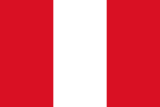
Peru flag
Languages
Native
Spanish
82%
Quechua
13%
Secondary languages
English
11%
Language Samples
Hola, ¿cómo estás?
Hello, how are you?
Estoy muy bien, gracias.
I am very well, thanks.
Uno, dos, tres, cuatro, cinco, seis, siete, ocho, nueve, diez.
One, two, three, four, five, six, seven, eight, nine, ten.
Linguistic History

Spanish was imposed on the Inca Empire following Francisco Pizarro's conquest beginning in 1532, overlaying the vast Quechua-speaking administrative network of Tawantinsuyu — the most extensive pre-Columbian empire in the Americas. Quechua, which the Inca had themselves spread as a lingua franca across the Andes, was used strategically by Spanish missionaries and colonial administrators before being suppressed during the nineteenth century; it nonetheless contributed globally recognized words such as 'condor,' 'llama,' 'coca,' 'puma,' and 'quinoa' to world languages via Spanish. Andean Spanish — spoken in the highland regions of Peru — retains distinct phonological features shaped by Quechua influence, including the merger of /e/ and /i/ vowels, and a more syllable-timed rhythm compared to coastal Peruvian Spanish. Peru is constitutionally bilingual: Quechua and Aymara hold co-official status in the regions where they are predominant, and Quechua is the most widely spoken indigenous language in the Americas with roughly eight million speakers across several countries. Lima Spanish, spoken on the coast, is often regarded as a prestige variety and has been shaped by twentieth-century internal migration from the highlands.

Similar Languages
Portuguese
89%
Italian
82%
French
75%
Romanian
71%
Media
Machu Picchu, the Inca citadel in the Andean highlands — the heartland of Quechua civilization and linguistic heritage.
Photo: Pedro Szekely · CC BY-SA 2.0
Did You Know
01
Quechua, co-official alongside Spanish in Peru's highland regions, is the most widely spoken indigenous language family in the Americas, with around 8–10 million speakers across Peru, Bolivia, Ecuador, and neighboring countries.
02
Peruvian Spanish gave the world many everyday words: 'condor' (kuntur), 'llama' (llama), 'puma' (puma), 'coca' (kuka), and 'quinoa' (kinuwa) all entered English via Quechua through Spanish.
03
Andean Peruvian Spanish is distinctively influenced by Quechua phonology: highland speakers often reduce the five-vowel Spanish system toward Quechua's three-vowel system, merging /e/–/i/ and /o/–/u/ in unstressed positions.
Want to learn this language?
Start learning Spanish today
Learn with Lingua →