Panama

Romance
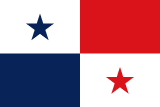
Panama flag
Languages
Native
Spanish
93%
Secondary languages
English
14%
Language Samples
Hola, ¿cómo estás?
Hello, how are you?
Estoy muy bien, gracias.
I am very well, thanks.
Uno, dos, tres, cuatro, cinco, seis, siete, ocho, nueve, diez.
One, two, three, four, five, six, seven, eight, nine, ten.
Linguistic History

Spanish conquest of Panama began in 1501 and the country served as the gateway for Spanish colonisation of South America, making its variety of Spanish among the oldest in the Americas. The construction of the Panama Canal (1904–1914) brought a large influx of English-speaking workers from the Caribbean and the United States, deeply shaping the linguistic landscape of the Canal Zone. After full Panamanian sovereignty over the Canal was restored in 1999, Spanish reasserted dominance, though English retains strong commercial and educational presence. Panamanian Spanish features notable Caribbean influences including consonant weakening and a fast speech rhythm. Numerous indigenous languages, including Ngäbere and Kuna, are also spoken by communities in rural and coastal areas.

Similar Languages
Costa Rica
93%
Colombia
90%
Nicaragua
88%
Venezuela
85%
Media
Ships passing through the Gatun Locks of the Panama Canal
Photo: Stan Shebs · CC BY-SA 3.0
Did You Know
01
Panama City is the only capital city in the world to have a rainforest within its metropolitan limits — the Parque Natural Metropolitano.
02
The word 'Panama' is believed to derive from an indigenous term meaning 'abundance of fish' or 'abundance of butterflies', though the exact origin is debated.
03
Panamanian Spanish drops the 's' at the end of syllables, a feature common across Caribbean coastal varieties of Spanish, giving the dialect its distinctive sound.
Want to learn this language?
Start learning Spanish today
Learn with Lingua →