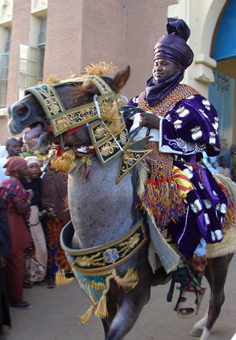
Nigeria is Africa's most populous nation and one of its most linguistically diverse, home to more than 500 distinct languages. The three dominant tongues — Hausa, Yoruba, and Igbo — reflect three of the continent's great civilisational traditions. Hausa, a Chadic language of the Afro-Asiatic family, has served as a trade lingua franca across the West African Sahel for centuries and today is spoken by roughly 80 million people across the region. Yoruba, spoken in the southwest, underpins a rich oral literary tradition including the Ifá corpus, now listed by UNESCO as an Intangible Cultural Heritage. Igbo, spoken in the southeast, has hundreds of dialects and a history deeply intertwined with the transatlantic slave trade, through which Igbo cultural elements reached the Americas. English became the official language under British colonial rule formalised in 1914, when the Northern and Southern Protectorates were amalgamated. Since independence in 1960 Nigeria has maintained English as its administrative and educational medium, though Hausa, Yoruba, and Igbo carry de facto national status and are used in federal broadcasting.