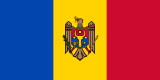
The language spoken in Moldova is linguistically identical to Romanian, descended from Vulgar Latin via the Eastern Romance branch that developed in the Danubian-Carpathian region after Roman Dacian colonization in the 2nd century CE. The region of Bessarabia — roughly corresponding to modern Moldova — was part of the Principality of Moldavia from the 14th century, where a Moldavian literary tradition flourished in the Old Church Slavonic script before transitioning to the Latin alphabet in the 19th century. Soviet occupation from 1940 imposed a policy of linguistic separatism: the language was renamed 'Moldovan', written in a Cyrillic script, and officially declared distinct from Romanian in order to weaken ties with Romania. Following independence in 1991 Moldova re-adopted the Latin alphabet, and in 2023 the constitution was amended to recognize the official language as 'Romanian' rather than 'Moldovan'. In the separatist region of Transnistria, which is not under Moldovan government control, the Cyrillic script for 'Moldovan' remains in official use alongside Russian and Ukrainian.
