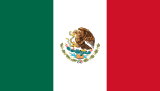
Mexico

Romance · Indo-European
Mexico flag
Languages
Native
Spanish
93%
Secondary languages
English
12%
Language Samples
Hola, ¿cómo estás?
Hello, how are you?
Estoy muy bien, gracias.
I am very well, thanks.
Uno, dos, tres, cuatro, cinco, seis, siete, ocho, nueve, diez.
One, two, three, four, five, six, seven, eight, nine, ten.
Linguistic History

Spanish arrived in Mexico with Hernán Cortés and the conquistadors in 1519, rapidly supplanting the dominant Nahuatl language of the Aztec Empire as the language of administration, religion, and commerce. Contact with Nahuatl and dozens of other indigenous languages — including Maya, Zapotec, and Mixtec — left a lasting imprint on Mexican Spanish, contributing everyday words such as chocolate, tomate, aguacate, and chile. The colonial period also introduced significant numbers of African-born enslaved people, whose languages added further layers to regional dialects, particularly along the Gulf Coast. Following independence in 1821, Mexican intellectuals debated whether to cultivate a distinct national language, but Spanish remained the official tongue while indigenous languages were gradually marginalized. Today Mexico has the largest Spanish-speaking population in the world — approximately 130 million people — and its variety of Spanish is characterized by relatively conservative vowel pronunciation and a rich substrate of Nahuatl loanwords.

Similar Languages
Portuguese
89%
Italian
82%
French
75%
Romanian
71%
Media
The Zócalo in Mexico City, the historic heart of the world's largest Spanish-speaking metropolis.
Did You Know
01
Mexico is the most populous Spanish-speaking country on Earth, with more native Spanish speakers than Spain itself.
02
Nahuatl, the language of the Aztecs, contributed hundreds of words to global vocabulary via Spanish, including 'chocolate' (xocolātl), 'avocado' (āhuacatl), and 'tomato' (tomatl).
03
Mexico recognizes 68 national languages under its General Law of Linguistic Rights, making it one of the most linguistically diverse countries in the world.
Want to learn this language?
Start learning Spanish today
Learn with Lingua →