Mauritania

Arabic · Afro-Asiatic
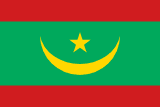
Mauritania flag
Languages
Native
Hassaniya Arabic
80%
Secondary languages
French
30%
Wolof
12%
Language Samples
مرحبا، كيف حالك؟
Marhaba, kayf ḥālak?
Hello, how are you?
أنا بخير جداً، شكراً.
Ana bikhayr jiddan, shukran.
I am very well, thanks.
واحد، اثنان، ثلاثة، أربعة، خمسة، ستة، سبعة، ثمانية، تسعة، عشرة.
Wahid, ithnan, thalatha, arba'a, khamsa, sitta, sab'a, thamaniya, tis'a, 'ashara.
One, two, three, four, five, six, seven, eight, nine, ten.
Linguistic History

Mauritania occupies a unique position as a cultural and linguistic bridge between the Arab-Berber north of Africa and sub-Saharan Black Africa. The dominant language is Hassaniya Arabic, a dialect that evolved from the Beni Hassan Arab tribal migrations of the 13th to 17th centuries and overlaid the earlier Berber Sanhaja population. Hassaniya preserves several archaic Arabic features while also incorporating Berber and sub-Saharan vocabulary. The country also has significant populations speaking Niger-Congo languages including Wolof, Pulaar (Fula), and Soninke in the south, reflecting its overlap with the Sahel linguistic zone. French remains influential as a legacy of colonial rule, used in government, education, and formal commerce despite Arabic being the sole official language since 1991.

Similar Languages
Moroccan Arabic (Darija)
60%
Algerian Arabic
55%
Media
The Sahara Desert in Mauritania, where the Arab north and sub-Saharan Africa meet
Did You Know
01
Hassaniya Arabic is also spoken by communities in Western Sahara, southern Morocco, northern Mali, and Senegal, making it a regional lingua franca of the western Sahara.
02
Mauritania is one of the last countries in the world where slavery and its social legacy remain a significant human rights issue, with traditional social strata historically defined partly along linguistic and ethnic lines.
03
The ancient city of Chinguetti in Mauritania was once the seventh holiest city in Islam and a major centre of Islamic learning, with private libraries still holding thousands of medieval Arabic manuscripts.
Want to learn this language?
Start learning Arabic today
Learn with Lingua →