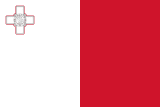
Maltese holds a singular distinction in world linguistics: it is the only Semitic language written in the Latin alphabet and the only Semitic language that is an official language of the European Union. Its roots trace to Siculo-Arabic, the now-extinct Arabic dialect spoken in Norman-controlled Sicily and Malta from the 9th to 13th centuries. When the Normans conquered Malta in 1091, the Arabic-speaking population was not expelled but gradually converted to Christianity — and their language survived, absorbing wave after wave of Romance vocabulary from Norman French, Sicilian, and Italian over the following centuries. By the time the Knights of St. John arrived in 1530, Maltese had developed into a fully distinct hybrid language. British colonial rule (1800–1964) added an English layer, and today roughly 50% of Maltese vocabulary is Romance (primarily Italian/Sicilian), about 32% Semitic (Arabic-derived), and the remainder English. Despite this extraordinary mixture, Maltese grammar, verb morphology, and core vocabulary remain fundamentally Semitic in structure.

