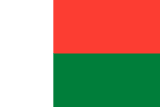
Malagasy is one of the most geographically remarkable languages in the world. Though Madagascar lies just 400 kilometres off the coast of Africa, its language is Austronesian — belonging to the Malayo-Polynesian branch — and is most closely related to the Maanyan language spoken in the interior of Borneo, over 6,000 kilometres away. This extraordinary linguistic fact reflects one of history's most astonishing maritime migrations: Austronesian seafarers from what is now Indonesia crossed the Indian Ocean and settled Madagascar approximately 1,500 to 2,000 years ago, long before any sustained African or Arab settlement. Subsequent Bantu migrations from East Africa and Arab trade across the Indian Ocean enriched Malagasy vocabulary, particularly in domains of agriculture and Islamic culture, but the grammatical structure and core vocabulary remain unmistakably Austronesian. French colonization from 1896 to 1960 introduced French as a language of administration and education, and both Malagasy and French remain official languages today. Malagasy itself is a remarkably unified language across the island, with regional dialects mutually intelligible to most speakers — a cohesion that underpins Madagascar's distinct national identity.
