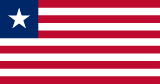
One, two, three, four, five, six, seven, eight, nine, ten — no palava.
One, two, three, four, five, six, seven, eight, nine, ten — no problem.
Linguistic History
Liberia holds a unique place in African history as a country founded in 1847 by formerly enslaved African Americans, repatriated by the American Colonization Society beginning in 1820. The founding settlers — known as Americo-Liberians — brought American English with them, and English became the country's official language from the outset, making Liberia one of only two African countries (alongside Sierra Leone) never colonised by a European power. Over generations, contact with dozens of indigenous communities produced Liberian English, a distinct variety with its own phonology, vocabulary, and idioms shaped by Kpelle, Bassa, Grebo, and other local languages. Kpelle, spoken in the north-central region, is the largest indigenous language with around 20% of the population. In total Liberia has approximately 30 indigenous languages from the Niger-Congo family. The Americo-Liberian elite dominated politics until the 1980 coup led by Samuel Doe, after which the country descended into civil war (1989–2003) — a period that intensified contact and mixing among Liberia's language communities.
Similar Languages
Nigerian Pidgin
50%
Krio (Sierra Leone)
45%
Media
Monrovia, named after US President James Monroe, is the capital of Africa's oldest republic and the cultural home of Liberian English.
Liberia was Africa's first republic, declaring independence in 1847, and was founded by formerly enslaved African Americans — a fact reflected in its capital Monrovia, named after US President James Monroe.
02
Liberian English has unique expressions like 'small-small' (gradually / a little bit), 'oh ma' (expression of sympathy), and 'no palava' (no problem), a word derived from Portuguese 'palavra' (word) via West African Pidgin.
03
The Vai people of Liberia independently invented one of Africa's few indigenous writing scripts around 1830 — a syllabary still in use today — making them one of a small number of communities to create an original writing system without external influence.