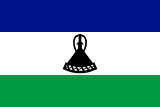
Lesotho is one of the few countries on Earth where a single language is spoken by virtually the entire population. Sesotho — also known as Southern Sotho — was forged into a national tongue through the political genius of King Moshoeshoe I, who united diverse Sotho and Nguni-speaking refugees fleeing the upheaval of the Difaqane (a period of widespread warfare in the 1810s–1820s) into the Basotho nation on the mountain stronghold of Thaba Bosiu. Missionary Eugène Casalis of the Paris Evangelical Missionary Society helped standardize Sesotho orthography and produced a grammar and dictionary in the 1840s, establishing a written literary tradition and a newspaper — Leselinyana la Lesotho — that has been published continuously since 1863, one of the oldest newspapers in southern Africa. Britain established the Basutoland Protectorate in 1868 at Moshoeshoe's request, shielding it from annexation by the Boer republics and later South Africa. Independent since 1966, Lesotho is entirely surrounded by South Africa, creating a unique geopolitical enclave whose Sesotho identity has been a pillar of national sovereignty.
