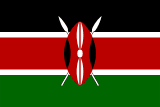
Languages
Native
Swahili
99%
Secondary languages
English
56%
Language Samples
Habari yako?
How are you?
Niko sawa sawa, asante.
I am very well, thanks.
Moja, mbili, tatu, nne, tano, sita, saba, nane, tisa, kumi.
One, two, three, four, five, six, seven, eight, nine, ten.
Linguistic History
Swahili (Kiswahili) emerged along the East African coast over a thousand years of trade between Bantu-speaking communities and Arab, Persian, and Indian merchants. Its grammar is solidly Bantu, but its lexicon absorbed hundreds of Arabic loanwords, giving it a distinctive cosmopolitan character. By the 19th century, Swahili had spread deep into the interior along caravan routes. After independence in 1963, Kenya adopted Swahili alongside English as a national and official language, and today it serves as the dominant language of daily life, markets, and broadcast media across the country.
Similar Languages
Comorian
62%
Lingala
40%
Kikuyu
35%
Luganda
32%
Media

Nairobi, Kenya's capital and East Africa's largest city, where Swahili and English mix in everyday life.
Photo: Daniel Case · CC BY-SA 4.0
Did You Know
01
Swahili is the most widely spoken African language by number of speakers, with estimates ranging from 150 to 200 million people across East and Central Africa.
02
The word 'safari' — now used worldwide — comes directly from the Swahili (and Arabic) word for 'journey' or 'travel'.
03
Kenya is home to over 60 distinct ethnic languages, including Kikuyu, Luo, Kamba, and Kalenjin, making Swahili an essential neutral lingua franca.