Italy

Romance · Indo-European
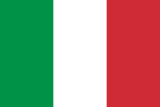
Italy flag
Languages
Native
Italian
93%
Secondary languages
English
34%
French
16%
Language Samples
Ciao, come stai?
Hello, how are you?
Sto molto bene, grazie.
I am very well, thanks.
Uno, due, tre, quattro, cinque, sei, sette, otto, nove, dieci.
One, two, three, four, five, six, seven, eight, nine, ten.
Linguistic History

Italian is the direct descendant of Vulgar Latin as spoken in the Italian Peninsula, with regional dialects that diverged significantly after the fall of the Western Roman Empire in the 5th century CE. For much of the medieval period, educated writing was conducted in classical Latin, while spoken vernaculars evolved independently — a diversity immortalized in the Sicilian School of poetry and the Tuscan works of Dante, Petrarch, and Boccaccio. The Florentine Tuscan dialect gained literary prestige largely through Dante's Divine Comedy (c. 1320), and Pietro Bembo's 16th-century treatises formally promoted it as the standard for written Italian. National unification in 1861 brought urgency to establishing a common spoken standard, a process described by statesman Massimo d'Azeglio as 'making Italians'. Today, standard Italian coexists with dozens of regional varieties — some, like Neapolitan and Venetian, are distinct enough to be considered separate languages.

Similar Languages
Spanish
82%
Portuguese
80%
French
78%
Romanian
77%
Media
The Colosseum in Rome, birthplace of Latin and the enduring symbol of the Roman civilization whose language evolved into Italian.
Photo: FeaturedPics · CC BY-SA 4.0
Did You Know
01
Standard Italian is based on 14th-century Florentine Tuscan — largely thanks to Dante Alighieri, whose Divine Comedy established the prestige of that dialect across the peninsula.
02
Italy has more UNESCO World Heritage Sites than any other country, and its language carries an equally rich cultural legacy: thousands of musical terms used worldwide (piano, forte, allegro, soprano) are Italian.
03
Regional Italian dialects can be mutually unintelligible — a speaker of Venetian and a speaker of Sicilian may struggle to understand each other without resorting to standard Italian.
Want to learn this language?
Start learning Italian today
Learn with Lingua →