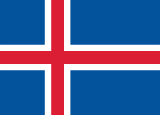
Iceland

Germanic
Iceland flag
Languages
Native
Icelandic
93%
Secondary languages
English
98%
Language Samples
Halló, hvernig hefur þú það?
Hello, how are you?
Mér líður mjög vel, takk.
I am very well, thanks.
Eitt, tvö, þrjú, fjögur, fimm, sex, sjö, átta, níu, tíu.
One, two, three, four, five, six, seven, eight, nine, ten.
Linguistic History

Icelandic is a North Germanic language descended from Old Norse, the language brought to Iceland by Norwegian settlers during the Viking Age settlement of 874 AD. Unlike the other Scandinavian languages, Icelandic has undergone remarkably little change over the past thousand years, meaning modern Icelanders can read the medieval Eddas and sagas with relative ease. This linguistic conservatism is partly attributed to Iceland's geographic isolation and a deliberate policy of language purism, in which new foreign concepts are expressed using native Icelandic roots rather than borrowing international terms — the word for 'computer' is 'tölva', a blend of 'tala' (number) and 'völva' (prophetess). Iceland has no dialects to speak of, making it one of the most linguistically homogeneous nations in the world. The country maintains one of the highest literacy rates globally, closely tied to its centuries-old tradition of saga literature.

Similar Languages
Faroese
85%
Norwegian (Nynorsk)
62%
Swedish
55%
Danish
53%
Media
Gullfoss waterfall in Iceland, one of the most iconic natural landmarks of the island nation
Photo: Nickspix · CC BY-SA 4.0
Did You Know
01
Icelandic has changed so little since the Viking Age that modern Icelanders can read 13th-century sagas written in Old Norse with minimal difficulty.
02
Iceland actively coins new words from native Icelandic roots rather than borrowing foreign terms — the Icelandic word for 'computer' is 'tölva', meaning approximately 'number-prophetess'.
03
Iceland has no family surnames in the traditional sense — instead it uses a patronymic (or matronymic) system, where a child's last name is derived from the father's (or mother's) first name.
Want to learn this language?
Start learning Icelandic today
Learn with Lingua →