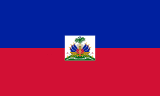
Languages
Native
Haitian Creole
95%
French
42%
Language Samples
Bonjou, kijan ou ye?
Hello, how are you?
Mwen trè byen, mèsi.
I am very well, thanks.
Youn, de, twa, kat, senk, sis, sèt, uit, nèf, dis.
One, two, three, four, five, six, seven, eight, nine, ten.
Linguistic History
Haitian Creole (Kreyòl ayisyen) emerged in the 17th–18th centuries on the island of Saint-Domingue, where enslaved Africans from dozens of different language groups needed a common tongue to communicate — with each other, and with French colonisers. The result is a language whose vocabulary is about 90% derived from French, but whose grammar and phonology were fundamentally restructured by West and Central African languages including Fon, Wolof, and Kongo. Haiti became the world's first Black republic in 1804 after a successful slave revolution, and Creole has been an official language alongside French since 1987.
Similar Languages
French
70%
Louisiana Creole
67%
Antillean Creole
65%
Spanish
38%
Media

Citadelle Laferrière — a UNESCO World Heritage fortress built by Haiti's first post-independence ruler
Photo: Rémi Kaupp · CC BY-SA 3.0
Did You Know
01
Haitian Creole has around 12 million speakers, making it the most widely spoken French-based Creole language in the world.
02
Despite sounding very French to the ear, Haitian Creole grammar is closer to West African languages — it has no gendered nouns, no conjugated verb endings, and uses separate tense markers.
03
Haiti was the first country in the world to permanently abolish slavery, following the only successful large-scale slave revolt in history, which concluded in 1804.