Guinea-Bissau

Romance · Indo-European
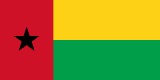
Guinea-Bissau flag
Languages
Native
Portuguese
27%
Secondary languages
Crioulo
90%
Fula
20%
Mandinka
14%
Language Samples
Olá, como você está?
Hello, how are you?
Estou muito bem, obrigado.
I am very well, thanks.
Um, dois, três, quatro, cinco, seis, sete, oito, nove, dez.
One, two, three, four, five, six, seven, eight, nine, ten.
Linguistic History

Guinea-Bissau was a Portuguese colony from the 15th century until independence in 1974, making it one of the last African countries to gain independence and one of the few achieved through armed struggle rather than negotiation. Portuguese is the official language, but only a minority speak it as a first language — the true lingua franca is Guinea-Bissau Creole (Crioulo), a Portuguese-based creole that developed along the West African coast during the slave trade and is spoken by nearly the entire population across ethnic lines. The country is home to over 20 indigenous ethnic groups — Fula, Balanta, Mandinka, and Papel among the largest — each with their own language. This makes Crioulo indispensable as a neutral common tongue that belongs to no single group.

Similar Languages
Portuguese
95%
Cape Verdean Creole
60%
Spanish
89%
Media
Presidential Palace in Bissau — built during the Portuguese colonial era
Photo: jbdodane · CC BY 2.0
Did You Know
01
Although Portuguese is official, fewer than 30% of the population speak it as a first language — Guinea-Bissau Creole (Crioulo) is the real national lingua franca.
02
Guinea-Bissau Creole is a Portuguese-based creole distinct from Cape Verdean Creole, despite both emerging from the same colonial trade networks.
03
Guinea-Bissau was one of the last African countries to gain independence, achieving it in 1974 after an 11-year armed liberation struggle led by Amílcar Cabral.
04
The country has over 20 indigenous ethnic groups, making linguistic diversity — and the neutral role of Crioulo — central to national identity.
Want to learn this language?
Start learning Portuguese today
Learn with Lingua →