Ghana

African · Niger-Congo
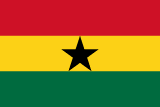
Ghana flag
Languages
Native
Akan (Twi)
47%
Secondary languages
English
67%
Language Samples
Maakye, wo ho te sɛn?
Good morning, how are you?
Me ho yɛ, meda ase.
I am fine, thank you.
Baako, mmienu, mmiɛnsa, ɛnan, enum, nsia, nson, nwɔtwe, nkron, du.
One, two, three, four, five, six, seven, eight, nine, ten.
Linguistic History

Ghana, known as the Gold Coast under British colonial rule, gained independence in 1957 as the first sub-Saharan African country to do so. The Akan language cluster — encompassing Twi (Asante Twi and Akuapem Twi), Fante, and several related dialects — is spoken by nearly half the population and acts as an informal national lingua franca in markets and everyday conversation. The Akan people, including the Ashanti Empire whose capital Kumasi remains a cultural heartland, built powerful states based on gold and kola trade long before European contact. English was imposed as the sole official language during the colonial period and remains the medium of formal education, government, and business. Alongside Akan, Ewe (spoken in the Volta Region) and Dagbani (in the north) are regionally significant. Ghana's constitution recognises no indigenous language as co-official, a point of ongoing national debate. The country is home to approximately 80 languages in total.

Similar Languages
Fante
85%
Ewe
20%
Media
Kumasi Central Market in the heart of Ashanti territory, where Twi is the dominant language of commerce.
Photo: Dave Ley · CC BY-SA 3.0
Did You Know
01
Akan (Twi) is a tonal language with two tones — high and low — and uses a nine-vowel system based on two sets of vowel harmony, meaning certain vowels never appear together in the same word.
02
The Ashanti kingdom's traditional greeting 'Akwaaba' (welcome) has become a pan-Ghanaian symbol of hospitality and appears on signage across the country.
03
Ghana is home to the kente cloth tradition, and the names of kente patterns are often phrases or proverbs in Twi, turning the textile into a woven language.
Want to learn this language?
Start learning Akan (Twi) today
Learn with Lingua →