Côte d'Ivoire

African · Niger-Congo
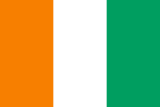
Côte d'Ivoire flag
Languages
Native
Dioula (Jula)
30%
Secondary languages
French
48%
Language Samples
I ni ce, i ka kɛnɛ wa?
Hello, how are you?
Tɔrɔ tɛ, i ni baara.
No trouble, thank you for your work.
Kelen, fila, saba, naani, duuru, wɔɔrɔ, wolonwula, segin, kɔnɔntɔn, tan.
One, two, three, four, five, six, seven, eight, nine, ten.
Linguistic History

Côte d'Ivoire (Ivory Coast) is West Africa's largest economy and one of its most linguistically diverse countries, home to around 70 indigenous languages from five major language families. Dioula (Jula), a Mande trade language virtually identical to Bambara of Mali, has functioned for centuries as the commercial lingua franca of the Sahel and forest-savanna corridor and today serves as the country's dominant informal tongue, especially in markets and inter-ethnic communication. The country's indigenous languages are grouped into four main clusters: Mande (Dioula, Mandinka), Gur / Voltaic (Senoufo, Lobi), Atlantic (none major), and Kwa (Baoulé, Bété, Dida, Agni). Baoulé, an Akan language related to Twi of Ghana, is the largest single ethnic-language community. French was imposed during the colonial era as French Ivory Coast (1893–1960) and remains the sole official language, used in all formal contexts. Abidjan, the economic capital, is home to Nouchi, an urban youth slang blending French, Dioula, and Baoulé — a vivid marker of the country's creolising street culture.

Similar Languages
Bambara (Mali)
85%
Mandinka (Guinea)
75%
Media
The Plateau district of Abidjan, the francophone commercial capital of Côte d'Ivoire and birthplace of Nouchi urban slang.
Photo: Abiba Pauline · CC BY-SA 4.0
Did You Know
01
Côte d'Ivoire's government officially insists that the French name 'Côte d'Ivoire' be used in all languages, rejecting translated versions like 'Ivory Coast' or 'Elfenbeinküste' — an unusual stance for any nation to take on the global use of its name.
02
Nouchi, the vibrant street slang of Abidjan, blends French, Dioula, Baoulé, and English into a fast-evolving urban creole that has produced its own music genre (zouglou), comedians, and even a Nouchi dictionary.
03
Dioula, Bambara (Mali), and Mandinka (Gambia) are mutually intelligible varieties of the same Mande dialect continuum — meaning a trader from Abidjan, a farmer from Bamako, and a fisherman from Banjul can hold a conversation with minimal difficulty despite living in three different countries.
Want to learn this language?
Start learning Dioula today
Learn with Lingua →