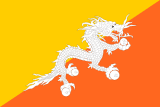
Bhutan

Sino-Tibetan
Bhutan flag
Languages
Native
Dzongkha
24%
Secondary languages
English
24%
Nepali (Lhotshamkha)
22%
Language Samples
ཀུཟུ་ཟང་པོ་ལགས། ཁྱོད་ག་དེ་སྦེ་ཡོདཔ་ཨིན་ན?
Kuzu zangpo lags. Khyod ga de sbe yodpa in na?
Hello. How are you?
ང་ལེགས་ཤོམ་ཡོདཔ་ཨིན། ཐུགས་རྗེ་ཆེ།
Nga legshom yodpa in. Thukje che.
I am well. Thank you.
གཅིག, གཉིས, གསུམ, བཞི, ལྔ, དྲུག, བདུན, བརྒྱད, དགུ, བཅུ།
Chig, nyi, sum, zhi, nga, drug, dün, gyé, gu, chu.
One, two, three, four, five, six, seven, eight, nine, ten.
Linguistic History

Dzongkha (རྫོང་ཁ, 'the language of the dzong fortress') is the national language of Bhutan and belongs to the Bodish branch of the Sino-Tibetan family. It is closely related to Classical Tibetan and uses the same Uchen (དབུ་ཅན) script — a script developed in the 7th century by the scholar Thonmi Sambhota under Tibetan king Songtsen Gampo. Because Dzongkha liturgical and classical texts are written in Classical Tibetan, educated Bhutanese are typically literate in a form of the language that diverges substantially from spoken Dzongkha, much as medieval Latin differed from vernacular European speech. Dzongkha was formally declared the national language in 1971 and has since been promoted through standardised education. Bhutan's extraordinary linguistic diversity — over 20 languages are spoken within its borders — reflects the many ethnic communities of the Himalayan kingdom, though Dzongkha functions as the unifying official tongue.

Similar Languages
Tibetan
65%
Nepali
35%
Sikkim Bhutia
55%
Ladakhi
45%
Media
Paro Taktsang (Tiger's Nest Monastery) clinging to a cliff in the Paro valley — one of Bhutan's most sacred Buddhist sites and a symbol of Dzongkha cultural heritage.
Did You Know
01
Dzongkha shares its script with Tibetan — the elegant Uchen letters, invented in the 7th century, are also used to write Classical Tibetan Buddhist scripture read across the Himalayas.
02
Bhutan is the only country to use Gross National Happiness (GNH) as an official development metric — even government policy documents are written with reference to this Dzongkha-rooted concept.
03
Over 20 distinct languages are spoken within Bhutan's borders, but most have no written tradition and are transmitted orally — Dzongkha literacy is the bridge that unifies them in formal contexts.
Want to learn this language?
Start learning Dzongkha today
Learn with Lingua →