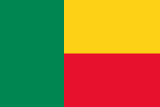
Benin (not to be confused with the ancient Benin Kingdom of present-day Nigeria) was the heart of the powerful Kingdom of Dahomey, which flourished from the 17th to 19th centuries and whose Fon-speaking kings became notorious for their role in the Atlantic slave trade. Fon (Fongbe), a Gbe language of the Niger-Congo family, is the most widely spoken indigenous language and the principal tongue of the southern coastal region including the historic capital Abomey. The Gbe language cluster encompasses Fon, Ewe (spoken across the border in Togo), Gen, and several other varieties — a continuum of mutually intelligible or closely related languages. Yoruba is also significant in the southeast near the Nigerian border. French was introduced during the colonial period when the territory was known as Dahomey (part of French West Africa), and it remains the sole official language. The country renamed itself Benin in 1975 under Mathieu Kérékou's Marxist government, taking its name from the Bight of Benin rather than the unrelated Benin Kingdom. Today approximately 55 languages are spoken within Benin's borders.
